
Advanced medical technology has transformed the way complex urological procedures are performed. Robotic surgery allows surgeons to operate through small incisions using high-definition visualization and computer-assisted instruments.
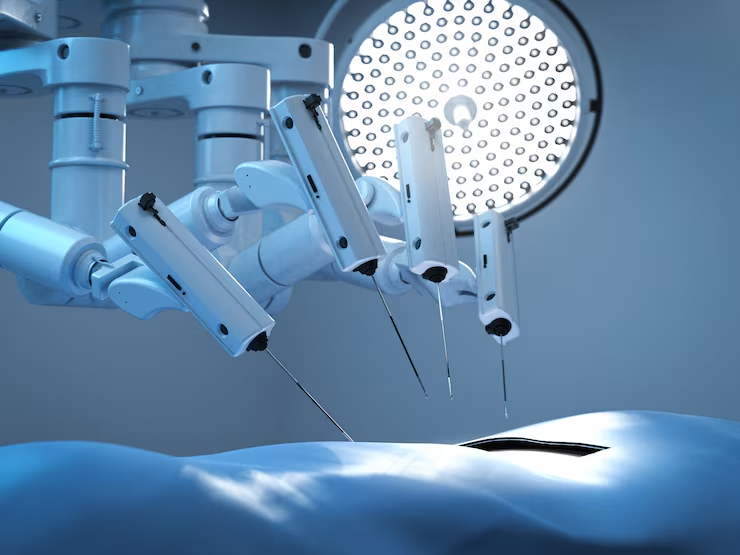
Advanced medical technology has transformed the way complex urological procedures are performed. Robotic surgery allows surgeons to operate through small incisions using high-definition visualization and computer-assisted instruments. These instruments mimic natural hand movements while offering greater stability and control, helping surgeons work with accuracy in delicate anatomical areas.
This method is commonly used for procedures involving the kidneys, prostate, bladder, and adrenal glands. Clear visualization and precise movement are especially important in urology, where structures such as blood vessels, nerves, and urinary pathways lie very close together.
Kidney-related conditions often require careful planning to remove abnormal tissue while preserving healthy kidney function. Precision plays a major role in maintaining this balance. Robotic-assisted techniques help surgeons work in confined spaces while maintaining a stable, magnified view of the surgical field.
This approach supports selective tumor removal and careful reconstruction when needed. Patients often experience reduced discomfort, minimal blood loss, and a smoother recovery process compared to traditional open procedures.
Kidney cancer management depends on tumor size, location, and overall kidney function. In many cases, partial kidney removal is possible, allowing preservation of healthy tissue. Robotic techniques support this approach by allowing controlled dissection and accurate suturing.
A Robotic Kidney cancer surgeon in Pune uses this technology to carefully separate cancerous tissue from surrounding structures, supporting precise tumor removal and structured healing.
Patients undergoing robotic-assisted kidney procedures may experience:
These outcomes depend on proper evaluation, surgical planning, and consistent follow-up care.
Kidney tumors vary in size and complexity. Some are detected early during routine imaging, while others are identified after symptoms appear. Surgical planning is adjusted based on tumor characteristics and kidney function.
In cases requiring Kidney tumour robotic surgery in Pune, the focus remains on complete tumor removal while maintaining kidney health. Robotic instruments allow fine movements that support tissue preservation and careful reconstruction when necessary.
Before surgery, imaging tests such as CT scans or MRI are used to map the tumor’s location and extent. Blood tests and functional assessments help ensure the body is prepared for surgery. This step-by-step evaluation supports safe surgical decision-making and reduces unexpected risks.
Recovery after robotic-assisted urological procedures is generally steady. Most patients begin walking soon after surgery and gradually resume routine activities. Pain is usually manageable, and hospital stays are often shorter than with open surgery.
Follow-up visits focus on monitoring healing, kidney function, and overall wellbeing. Long-term care helps ensure stable recovery and sustained health.
With accurate diagnosis, careful surgical planning, and consistent follow-up, robotic-assisted procedures support positive long-term outcomes. Preserving organ function and reducing physical strain are key advantages of this approach.
Robotic surgery has brought greater precision and control to modern urological care. By supporting accurate tumor removal, preserving healthy tissue, and encouraging smoother recovery, this approach plays an important role in managing kidney and urological conditions. When combined with structured evaluation and long-term follow-up, robotic-assisted procedures help maintain balance, function, and overall wellbeing.