
Kidney stones are hard deposits that develop within the kidneys when certain minerals and salts become concentrated in the urine. Treatment depends on the size, location, number of stones, symptoms, and overall health of the patient. Modern urology offers several minimally invasive options, including laser and endoscopic procedures, for effective stone treatment.
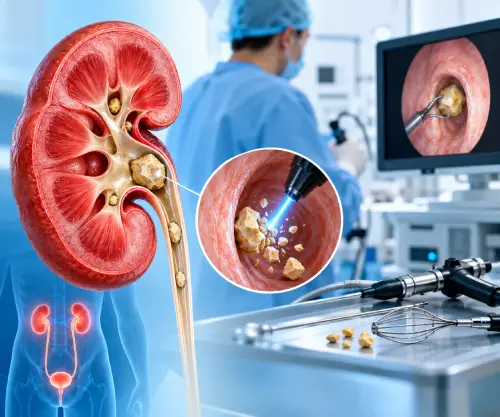
Kidney stones form when minerals and other substances in the urine crystallize and gradually develop into solid deposits. Small stones may pass naturally through the urinary tract, while larger stones can cause significant pain or obstruction.
Common symptoms include severe pain in the side or back, pain that may radiate toward the lower abdomen or groin, blood in the urine, nausea, vomiting, frequent urination, or discomfort while passing urine.
Proper evaluation helps determine the size, location, and characteristics of the stone. Ultrasound, X-ray, or CT scans may be recommended depending on the clinical situation.
Urine and blood tests may also be performed to assess infection, kidney function, and other factors that may contribute to stone formation. The findings help determine whether observation, medication, or an active stone-removal procedure is appropriate.
Laser stone treatment uses a specialized laser to break kidney or ureteric stones into smaller fragments. The procedure is performed through the urinary tract using an endoscopic instrument, avoiding the need for a large surgical incision.
Laser technology allows the surgeon to fragment stones precisely and remove or allow passage of the smaller pieces. The suitability of laser treatment depends on factors such as stone size, location, composition, and the patient's condition.
Endoscopic stone procedures use specialized instruments to reach stones through the natural urinary passage. Depending on the location of the stone, procedures such as ureteroscopy may be performed to visualize, fragment, and remove the stone.
These minimally invasive approaches can be used for selected kidney and ureteric stones and are often considered when stones are unlikely to pass naturally or are causing symptoms or obstruction.
Not every kidney stone requires surgery. Small stones without complications may sometimes be managed with adequate hydration, pain management, and medical treatment under appropriate medical supervision.
Larger stones, persistent symptoms, obstruction, infection, or stones that are unlikely to pass naturally may require active treatment. The most suitable procedure is selected after evaluating the stone and the patient's overall health.
When appropriate, laser and endoscopic stone procedures may offer several potential advantages, including:
The choice of treatment and expected recovery vary according to stone size, location, complexity, infection status, kidney function, and individual patient factors.
Retrograde Intrarenal Surgery, commonly known as RIRS, is a minimally invasive procedure used to treat selected kidney stones. A flexible ureteroscope is passed through the urinary tract to reach the kidney, where the stone can be visualized and treated using laser energy.
RIRS may be particularly useful for stones located within different parts of the kidney where access through other approaches may be less suitable.
Percutaneous Nephrolithotomy, or PCNL, is a minimally invasive procedure commonly used for larger or complex kidney stones. The procedure involves creating a small access tract through the skin directly into the kidney to allow the stone to be fragmented and removed.
PCNL may be recommended for large stone burdens, staghorn stones, or complex stones where other treatment options may not provide adequate stone clearance.
Recovery depends on the type of procedure performed, stone complexity, and the patient's overall health. Many patients can gradually return to their routine activities after minimally invasive procedures according to their doctor's advice.
Temporary urinary discomfort, mild blood in the urine, or increased urinary frequency may occur after certain procedures. Appropriate medications and follow-up help support a smooth recovery.
Removing an existing stone does not always prevent future stones from developing. Adequate fluid intake and appropriate dietary measures can help reduce the risk of recurrence.
Depending on the type of stone and individual risk factors, metabolic evaluation, stone analysis, urine testing, and dietary or medical recommendations may be advised.
Severe or persistent pain, fever, chills, vomiting, difficulty passing urine, or blood in the urine may require prompt medical evaluation. A kidney stone associated with urinary infection or significant obstruction can require urgent treatment.
Early assessment helps determine the cause of symptoms and allows appropriate treatment to be started when necessary.
Kidney stone treatment ranges from conservative management for selected small stones to minimally invasive procedures for larger or symptomatic stones. Laser and endoscopic techniques, including RIRS, URS, and PCNL, provide effective options for treating different types and sizes of urinary stones. Careful evaluation and individualized treatment planning help achieve appropriate stone clearance while supporting kidney health and recovery.