
Minimally invasive urologic surgery uses advanced surgical techniques and specialized instruments to diagnose and treat a wide range of urinary and male reproductive conditions. These procedures may include endoscopic, laparoscopic, robotic-assisted, and other keyhole surgical approaches, depending on the patient's condition and treatment needs.
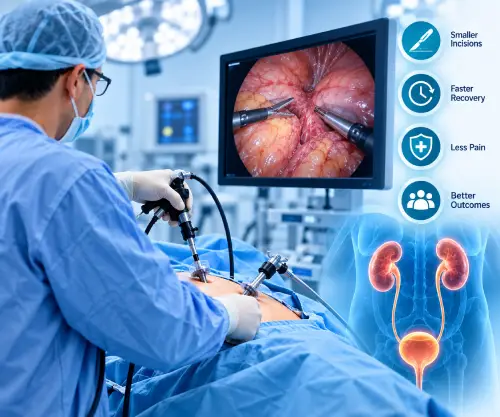
Minimally invasive surgery allows urologists to access and treat affected areas using small incisions or natural urinary passages. Compared with conventional open surgery, selected minimally invasive procedures may reduce tissue disruption and support a faster recovery.
The appropriate surgical technique depends on the type, location, and severity of the condition, as well as the patient's overall health, anatomy, previous treatments, and individual requirements.
Before minimally invasive surgery, patients undergo a detailed evaluation to understand the underlying urological condition. Assessment may include medical history, physical examination, urine and blood tests, and appropriate imaging investigations.
Ultrasound, CT scans, MRI, cystoscopy, or other specialized investigations may be recommended depending on the condition. The findings help the urologist determine whether minimally invasive surgery is appropriate and select the most suitable approach.
Endoscopic procedures are performed through natural urinary passages using specialized instruments and cameras. They can be used for several conditions affecting the urethra, bladder, ureters, and other parts of the urinary system.
Procedures such as cystoscopy, ureteroscopy, and transurethral surgeries may be performed when clinically appropriate. These techniques can help diagnose, remove, or treat selected urological conditions without a large external incision.
Laparoscopic surgery uses small abdominal incisions through which specialized surgical instruments and a camera are introduced. This approach may be used for selected kidney, adrenal, and other urological procedures.
Laparoscopic techniques can provide detailed visualization of the surgical area while minimizing the size of external incisions. Suitability depends on the patient's condition and the complexity of the planned procedure.
Robotic-assisted surgery is an advanced form of minimally invasive surgery that uses specialized robotic instruments controlled by the surgeon. The system can provide magnified visualization and precise instrument movement during selected complex procedures.
Robotic surgery may be considered for selected prostate, kidney, bladder, and other urological conditions. The decision depends on the patient's diagnosis, anatomy, disease stage, previous treatment, and overall health.
Minimally invasive techniques play an important role in the treatment of kidney stones and selected kidney conditions. Depending on the size and location of a stone, procedures such as ureteroscopy, laser stone treatment, RIRS, or PCNL may be considered.
The choice of procedure is based on the stone characteristics, urinary anatomy, kidney function, symptoms, and other individual patient factors. Proper evaluation helps determine the most appropriate treatment approach.
Minimally invasive techniques can offer important advantages for appropriately selected patients. Potential benefits may include:
The benefits and recovery period vary depending on the procedure, underlying condition, surgical complexity, and individual patient factors.
Every patient requires an individualized surgical plan. The choice between endoscopic, laparoscopic, robotic-assisted, or conventional surgery depends on the patient's diagnosis, anatomy, disease severity, previous treatments, and overall health.
The urologist evaluates the available treatment options and discusses the expected benefits, possible risks, recovery requirements, and follow-up care before proceeding with surgery.
Recovery depends on the type and complexity of the procedure performed. Many minimally invasive procedures allow patients to resume normal activities sooner than may be possible after major open surgery, although recovery varies from person to person.
Medication, appropriate physical activity, hydration, wound care when required, and scheduled follow-up are important parts of postoperative recovery. Patients should follow the specific instructions provided by their treating urologist.
Follow-up after minimally invasive surgery helps assess recovery, treatment results, and urinary function. Depending on the procedure, follow-up may include physical examination, urine tests, blood tests, ultrasound, CT imaging, cystoscopy, or other investigations.
Regular monitoring is particularly important for conditions that may recur or require long-term management. Follow-up schedules are customized according to the patient's condition and treatment.
Minimally invasive urologic surgery provides advanced treatment options for a wide range of urinary and male reproductive conditions. Endoscopic, laparoscopic, robotic-assisted, and other minimally invasive techniques can help selected patients receive effective treatment with smaller incisions and structured recovery. Careful evaluation, individualized surgical planning, modern techniques, and appropriate follow-up are important for achieving the best possible treatment outcomes and supporting long-term urological health.